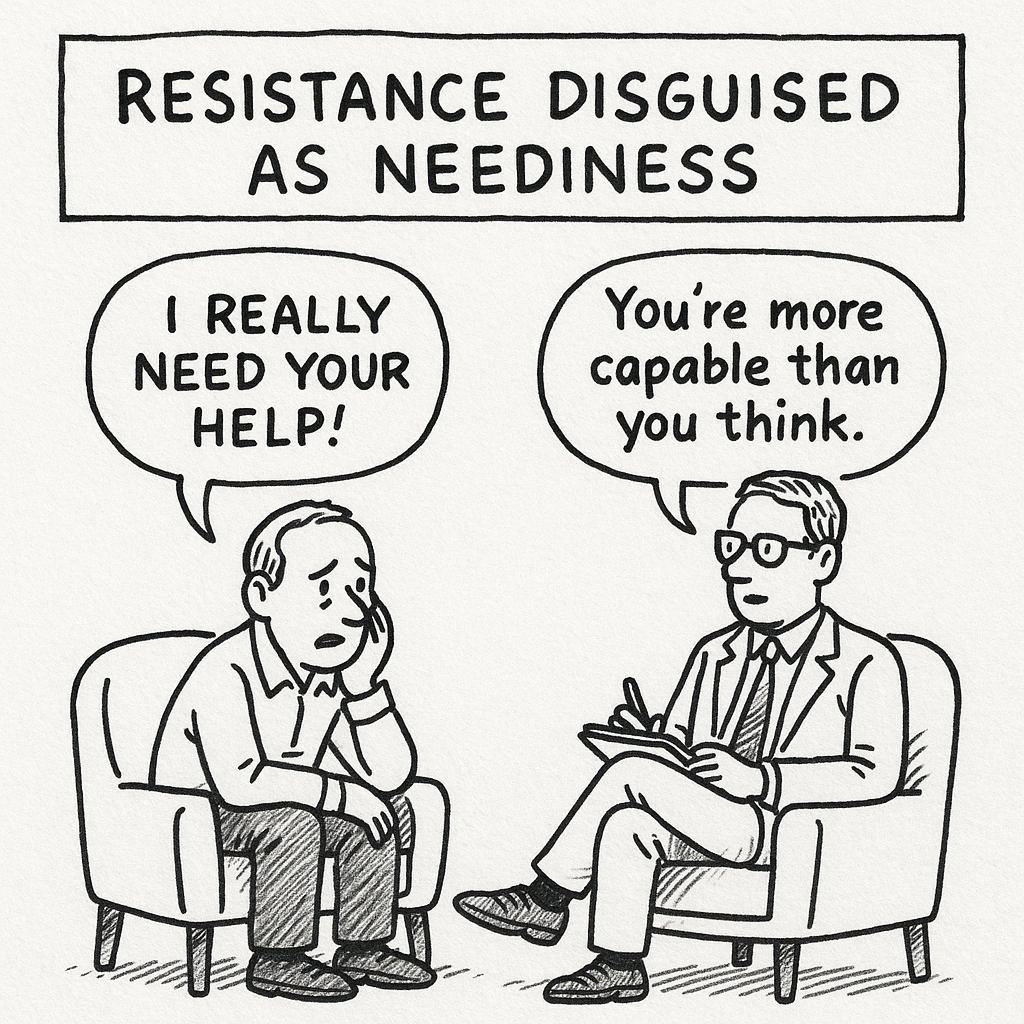
6 Resistance Disguised as Neediness
While some clients resist change with overt power plays or hidden agendas, others appear compliant—yet stall transformation by positioning themselves as needy, unready, or too dependent on the consultant. These patterns often mask deeper dynamics of avoidance, fear, or identity protection.
In Eric Berne’s Games People Play, these are “Greenhouse” and “Stupid” games—behaviors that feign helplessness or over-reliance. When mapped onto The Organisational Zoo, these show up as loyal Dogs, hesitant Turtles, obedient Sheep, distracted Monkeys, and impulsive Kangaroos. These clients don’t shout resistance—they whimper it, often disarming consultants in the process.
To navigate these “help me” games, the consultant must respond with structure, accountability, and empathy—not saviorhood.
6.1 Game: “Greenhouse”
- Zoo Type: 🐶 Dog (loyal, approval-seeking)
- Description: Eager and affectionate, the client wants the consultant close at all times. They improve only under external attention and wither when left alone.
- Payoff: Consultant remains central and indispensable, feeding the client’s need for validation.
- Antidote: Coach toward autonomy with stretch assignments. Design offboarding milestones.
- Zoo Strategy: Reward independence. Introduce “handoff ceremonies” to mark transitions of ownership.
6.2 Game: “Stupid”
- Zoo Type: 🐢 Turtle + 🐑 Sheep
- Description: The client defaults to “I don’t know” in order to delay decision-making. They appear docile, passive, and low-risk, but frustrate progress.
- Payoff: Avoids being blamed for mistakes by avoiding choices altogether.
- Antidote: Use flipped authority: “If you did know, what would you recommend?”
- Zoo Strategy: Build safety through micro-wins. Set confidence-building checkpoints with progressive responsibility.
6.3 Game: “Teach Me, Then Do It for Me”
- Zoo Type: 🐒 Monkey (inquisitive but noncommittal)
- Description: The client constantly asks “how?” without ever applying the answer. They appear engaged and curious, but never operationalize the advice.
- Payoff: Gains consultant attention and intellectual stimulation without committing.
- Antidote: Convert curiosity into contracts: “What’s your next step after learning this?”
- Zoo Strategy: Make the Monkey a learning ambassador—create structures for knowledge sharing, not just consumption.
6.4 Game: “It’s Urgent—Until It Isn’t”
- Zoo Type: 🦘 Kangaroo (jumpy, reactive, easily distracted)
- Description: The client launches projects with excitement, disappears mid-sprint, then bounces back claiming urgency again.
- Payoff: Maintains control through unpredictability. Consultant becomes emotional timekeeper.
- Antidote: Track visible milestones and burn-down charts. Frame urgency as investment.
- Zoo Strategy: Use two-week sprints with clear review rituals. Reward consistency, not intensity.
6.5 Meta Insight: Help That Harms
These games reflect a learned helplessness loop—the client signals need, the consultant overfunctions, and autonomy erodes. While it’s tempting to feel indispensable, the ethical consultant recognizes when their help disempowers.
Clients may not consciously intend to trap you. Often, these behaviors emerge from poor psychological safety, prior project trauma, or reward structures that discourage initiative. Your goal isn’t to expose the game—it’s to create new scripts for growth and accountability.
When you stop feeding the Dog, slow the Monkey, ground the Kangaroo, and nudge the Turtle, you move from therapist to ecosystem designer—cultivating conditions where trust, learning, and courage can thrive.