2 Deflecting Focus
In consulting engagements—especially those involving transformation, data, or strategic change—resistance rarely shows up as outright hostility. Instead, it often takes the form of deflection: shifting attention from substance to distraction, from decisions to decoration, or from ownership to invisible influences. This section outlines key deflecting games consultants encounter, paired with insights from The Organisational Zoo to help identify and navigate these behaviors effectively.
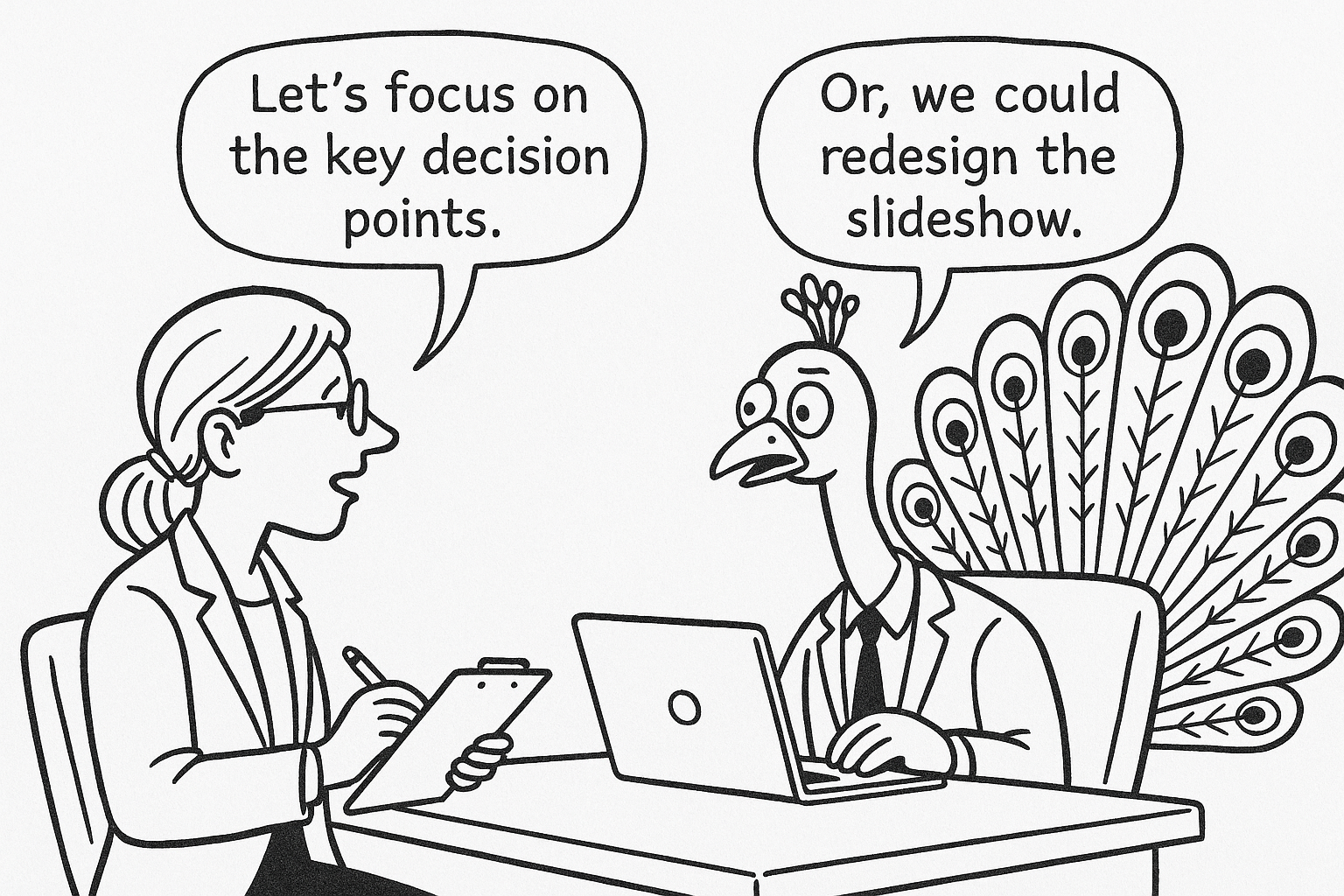
2.1 Game: “Make It Pretty So We Don’t Have to Use It”
- Zoo Archetype: 🦚 Peacock (image-conscious, approval-seeking)
- Description: Stakeholders obsess over visual design and presentation, while avoiding real adoption or usage of the solution.
- Payoff: Project appears innovative and attractive without requiring behavioral change.
- Antidote: Tie aesthetic decisions to actual usage metrics and business value.
- Zoo Strategy: Acknowledge the value of beauty, then guide the Peacock toward function-first design decisions.
2.2 Game: “Yes, But What Does the Data Say About Feelings?”
- Zoo Archetype: 🦢 Swan (graceful, emotionally attuned)
- Description: Quantitative insights are dismissed in favor of perceived emotional truths.
- Payoff: Maintains intuitive or political narratives while discrediting evidence.
- Antidote: Integrate qualitative input into quantitative findings; frame data as a source of empathy, not control.
- Zoo Strategy: Honour emotional concerns before transitioning to pattern-based analysis.
2.3 Game: “Please Solve Culture, But Don’t Touch Anything”
- Zoo Archetypes: 🐑 Sheep (conformist) + 🐍 Snake (manipulative, avoids accountability)
- Description: Leaders request culture change but resist addressing real enablers—norms, power dynamics, or leadership behaviors.
- Payoff: Appears progressive while avoiding structural risk.
- Antidote: Surface the unwritten rules and what the organization tolerates and rewards.
- Zoo Strategy: Use peer storytelling to mobilize the Sheep, and draw the Snake into visible influence via narrative co-creation.
2.4 Game: “Look Over There!”
- Zoo Archetype: 🐒 Monkey (playful, distracts with novelty)
- Description: Teams constantly pivot to shiny tools, trendy frameworks, or irrelevant data rabbit holes.
- Payoff: Avoids accountability and commitment by staying in a state of exploration.
- Antidote: Anchor conversation to the agreed outcome; implement idea parking lots and structured retrospectives.
- Zoo Strategy: Use time-boxed ideation to channel Monkey energy, then refocus with clarity frameworks like OKRs.
2.5 Game: “The Shadow Strategist”
- Zoo Archetype: 🦝 Raccoon (elusive, cunning, prefers operating unseen)
- Description: Real decisions are shaped by unofficial influencers or advisors outside of the governance structure.
- Payoff: Maintains control while evading formal accountability.
- Antidote: Ask directly, “Who do people really listen to when the meeting ends?” and triangulate influence networks.
- Zoo Strategy: Involve the Raccoon in off-record sense-making or confidential advisory roles to harness their insight without allowing them to sabotage alignment.
2.6 Meta Insight
All these games share a common function: they preserve identity, safety, and status by deflecting the consulting focus away from discomfort, decision, and disruption. The role of the consultant is not to judge these games, but to name them without blame and channel the energy they contain toward productive tension and resolution.
In the jungle of change, sometimes the loudest noise isn’t resistance—it’s distraction disguised as engagement.